

The Arctic Oil Spill Response Technology Joint Industry Programme (JIP) was launched in 2012 to conduct targeted research that builds on an already extensive knowledge base to further improve Arctic spill response capabilities.
Abbreviation:
ART

The Arctic Oil Spill Response Technology Joint Industry Programme (JIP) was launched in 2012 to conduct targeted research that builds on an already extensive knowledge base to further improve Arctic spill response capabilities.
 |
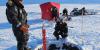
Dispersants in IceThe key goal of JIP research on dispersant use in ice was to expand the existing knowledge base on dispersants to allow responders and decision makers to know when dispersants could be efficiently used. There is an extensive knowledge base on dispersant use in cold climates. This has led to an understanding of what oil types and environmental conditions allow effective dispersant use. |
 |
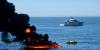
Environmental Effects from Arctic Oil SpillsThe overall goals of JIP research into the environmental effects of Arctic oil spills and the tools used to mitigate impacts were to improve industry response preparedness while gaining increased stakeholder acceptance of the role of environmental impact assessment in oil spill response planning and operations. In achieving these goals, the JIP aimed to improve the available knowledge base for using Net Environmental Benefit Analysis (NEBA) in oil spill response decision-making. |
 |
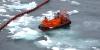
In-Situ Burning of Oil in Ice-Affected Waters -State of KnowledgeThe emphasis was on developing and validating aerial delivery systems, taking advantage of recent research into the use of herders to promote burning in open drift ice conditions and open water where slicks are otherwise often too thin to burn in their natural state. An important aim of this work was to substantially move this new response strategy along the path from research to operational status. |
 |
Mechanical Recovery of Oil in IceThe aim of the JIP’s mechanical recovery initiative was to examine results from previous research projects and operational experience with mechanical recovery in ice to identify any opportunities to substantially improve recovery performance. |
 |
Oil Spill Detection and Mapping in Low Visibility and IceImprove remote sensing and monitoring capabilities in darkness and low visibility, for a wide range of scenarios including: oil on the ice surface, oil on the water between floes, and oil trapped underneath or within the ice. |
 |
Oil Spill Trajectory Modelling in IceThe overall aims of this research component were to improve the ability of contingency planners and responders to predict the movement of oiled ice with greater accuracy over longer time periods in a range of ice conditions, including pack ice and the more dynamic conditions of the Marginal Ice Zone (MIZ). The research objectives were: 1) to first improve the resolution offered by the existing ice models, and 2) to provide the ice model data outputs in formats that the existing oil spill fate and behaviour models could efficiently import and process. |